



 Тоҷикӣ
 Русский
 English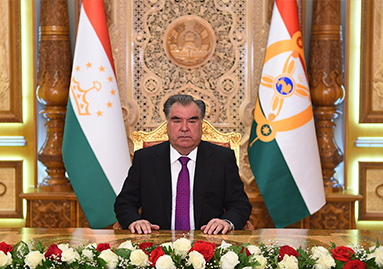


In his address, the Founder of Peace and National Unity – Leader of the Nation, President of the Republic of Tajikistan Emomali Rahmon, "On the Main Directions of the Country's Domestic and Foreign Policy," emphasized the improvement in the socio-economic situation of the population, especially over the past 10 years. During this period, gross domestic product per capita increased 2.7 times, from 6 thousand somoni in 2015 to 16.4 thousand somoni in 2025.
During this period, the poverty rate decreased to 19 percent. The population's income increased from 26 billion somoni in 2015 to 165 billion somoni in 2025, more than six times.
An analysis of statistical data shows that the average per capita income (per family member per month) has been growing annually. For example, the average monthly per capita income per household member in 2000 was 16.9 somoni, gradually increasing to 190.2 somoni in 2010, an increase of 11.3 times. Gross household income was 1,1981 somoni, while total expenses were 1,119.6. As can be seen, this has increased year after year, reaching 920.8 somoni in 2023 and 5,617.1 somoni per family on average (the average number of households in 2020 was 6.1).
In his speech, he particularly emphasized that the population is increasing year after year. The country's population increased from 8.5 million in 2015 to 10.7 million in 2025, an increase of 26 percent, and the life expectancy index increased from 70 to 77 years and increasing life expectancy proves that health systems have been improving due to approving different types of programs, conceptions and strategies during independents years.
Over the years of independence, the Republic of Tajikistan has developed a number of legal and regulatory acts that have served and continue to serve in the management of demographic processes, including stimulating the birth rate of the population, improving health and the healthcare system to reduce mortality (overall mortality, infant mortality, child mortality, maternal mortality, etc.), thereby increasing life expectancy, as well as regulating external and internal migration processes.
As mentioned in NDS for 2030, demographic processes, due to their interdependence with ongoing social and economic processes, are crucial for long-term development. The republic's population will grow steadily and could reach 11.5 million by 2030. The expected growth in the working-age population in the republic presents opportunities for accelerated economic growth. The majority of the population (approximately 60%) will be of working age (15 to 64 years old), which will become the engine of economic growth, but only if a sufficiently skilled labor force is ensured. Many Asian countries, having successfully taken advantage of the current situation, have entered a new phase of development. If Tajikistan does not take certain measures, the "demographic window of opportunity" will turn into a "demographic window of threat." The proportion of the country's youth population under 20 reached 45% in 2015. This category will form the backbone of the working-age population in 2030, so harnessing the labor potential of young people is crucial. This "demographic window" will have a positive impact on both the country's overall socioeconomic development and the well-being and opportunities of individual families.
Increasing the absolute number of populations will lead to increase the number of households. According the results of population census in 2020, the number of households consist – 1,6 million, concerning to the results of population census of 2010, the number of households increased up to 20%, that from 1,2 million to 1,6 million. the Founder of Peace and National Unity – Leader of the Nation, President of the Republic of Tajikistan Emomali Rahmon mentioned about ensuring families with house and highlighted that, in order to improve the social conditions of the people and expand citizens' access to housing, it is necessary to improve the mechanisms for developing the mortgage loan market and take appropriate measures to increase the volume of such loans to the population.
National Development Strategy up to 2030 mentioned about managing housing issues of households by highlighting following tasks:
Developing the primary mortgage lending market, including through the formation and implementation of mortgage lending standards and promoting the technical and financial stability of banking activities;
Creating conditions for the development of a secondary mortgage financing market and the securitization of mortgage loans;
Promoting targeted savings by the population for the purpose of purchasing housing, including through construction and savings cooperatives;
Comprehensive development of the real estate market, which includes the need to improve the regulatory framework for securing ownership rights to land plots for housing construction, increasing the supply of urban land for housing, ensuring the availability of a sufficient portion of this land for households with incomes at the median income level, and developing national standards and financing programs for urban planning, land management, and zoning to ensure an adequate supply of affordable housing;
Developing a system of support for access to housing, including for young families and young professionals;
revision of urban planning principles and rules (reconstruction and new construction, centralized and autonomous sources of public services, monitoring of safety standards, energy efficiency, seismic resistance).
When developing socioeconomic and demographic policies, it is necessary to consider the ultimate goal of Tajikistan's long-term development, as outlined in the National Development Strategy (NDS) for the period up to 2030. This goal is to improve the standard of living of the country's population by ensuring sustainable economic development, through achieving the following goals over the next 15 years:
1. Ensuring energy security and efficient use of electricity;
2. Overcoming the communications impasse and transforming the country into a transit country;
3. Ensuring food security and access to high-quality food;
4. Expanding productive employment.
It should be noted that Tajikistan's ultimate development goal for the next 15 years and its subgoals are interrelated with demographic processes.
The Founder of Peace and National Unity – Leader of the Nation, President of the Republic of Tajikistan Emomali Rahmon in his speech mentioned that for the sake of improving population wellbeing following step will be done from September 1, 2026:
– the official salaries of employees of educational institutions, including preschool and secondary general education institutions, be increased by 25 percent, other educational institutions, science, culture, sports, healthcare, social protection institutions, state authorities and administration, and other budgetary institutions, as well as scholarships, be increased by 20 percent;
– the current salaries of law enforcement officers, military personnel, and other employees of these bodies be increased by 20 percent;
– the minimum wage for all economic and social sectors of the country be set at 1,300 somoni per month.
The Founder of Peace and National Unity – Leader of the Nation, President of the Republic of Tajikistan Emomali Rahmon in his speech mentioned that we consider the state policy of working with youth as a key direction in the axis of the state's social policy, and we are using all opportunities for its effective implementation. Because our youth are the main driving force of society, and we are proud of their high sense of national identity, self-awareness, and patriotism. Today, our youth, with their constructive work and activities, make a great contribution to the political, economic, social, and cultural life of our independent country.
It is must to highlight that demographic processes are largely dependent on a country's youth and their share of the total population, and the role of youth in demographic development can be examined from various perspectives. It should be noted that youth are a resource for the sustainability of demographic processes, as they possess a high reproductive potential, which contributes to the replacement of generations and, naturally, population growth. For example, the Law of the Republic of Tajikistan "On Youth and State Youth Policy," adopted in 2004, defines youth as a socio-demographic group encompassing individuals aged 14-30. In 2024, the share of youth in the Republic of Tajikistan was 28.9%. For example, in Uzbekistan it was 25.7%, in Kyrgyzstan 35% (but youth is considered to be aged 14-35), and in Kazakhstan 28.0% (but youth is considered aged 14-34). In Tajikistan, over the 21 years since the adoption of the Law of the Republic of Tajikistan "On Youth and State Youth Policy," the proportion of youth has decreased from 36.7% in 2005 to 28.9% in 2024. This reduction has enabled the formation of a demographic dividend.
The role of young people in demographic stability can be viewed from various perspectives. On the one hand, youth are a resource for demographic development, as they possess high reproductive capacity and can ensure the replacement of generations and population growth.
In conclusion, I would like to point out that the Founder of Peace and National Unity - The Leader of the Nation, the President of the Republic of Tajikistan, Respected Emomali Rahmon, is actively working to develop the Republic of Tajikistan and improve the well-being of the population, and we must support his policies, we must always be with him.
Akbar Subkhonov
Head of department – demographic research
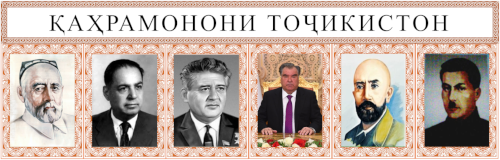
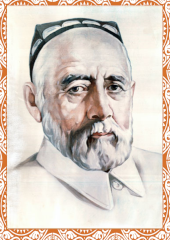 Адиб, олим ва асосгузори адабиёти муосири тоҷик. Аввалин Президенти Академияи илмҳои Ҷумҳурии Тоҷикистон. Муаллифи асарҳои «Таърихи амирони манғитияи Бухоро», «Таърихи инқилоби фикрӣ дар Бухоро», «Намунаи адабиёти тоҷик», «Дохунда», «Ғуломон», «Ёддоштҳо» ва дигар асарҳо, ки ба 29 забони хориҷӣ нашр шудаанд.
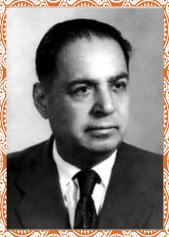 Олим, академики Академияи Илмҳои ИҶШС, арбоби ҳизбӣ ва давлатӣ, муаллифи китоби оламшумули «Тоҷикон» ва зиёда аз 300 асару мақолаҳо.
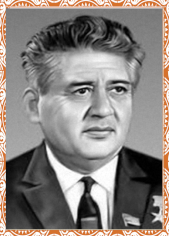 Шоири халқӣ, раиси Иттифоқи нависандагони Тоҷикистон, Қаҳрамони меҳнати сотсиалистӣ, Раиси Кумитаи якдилии халқҳои Осиё ва Африқо. Барои достонҳои «Қиссаи Ҳиндустон»(1948), «Ҳасани аробакаш», «Чароғи абадӣ», «Садои Осиё»,(1960) «Ҷони ширин» (1963) бо ҷоизаҳои давлатии ИҶШС, ҶШС Тоҷикистон ва байналмилалии ба номи Ҷ. Неҳру (1967) сарфароз шуда буд.
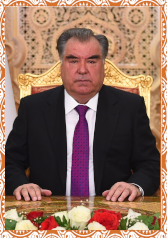 Президенти Ҷумҳурии Тоҷикистон. 19 ноябри соли 1992 дар иҷлосияи XVI Шўрои Олии Ҷумҳурии Тоҷикистон раиси Шўрои Олии Ҷумҳурии Тоҷикистон, 6 ноябри соли 1994 бори аввал, солҳои 1999, 2006 ва 2013 Президенти Ҷумҳурии Тоҷикистон интихоб гардидаст.
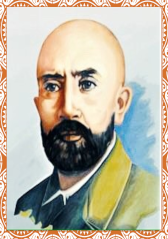 Нусратулло Махсум (Лутфуллоев) ходими давлатӣ ва ҳизбӣ. Солҳои 1924-1926 раиси Кумитаи инқилобии ҶМШС Тоҷикистон, солҳои 1926-1933 раиси Кумитаи Иҷроияи Марказии ҶШС Тоҷикистон.
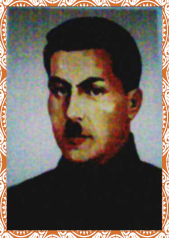 Ходими давлатӣ ва ҳизбӣ. Солҳои 1929-1931 котиби Ҳизби коммунистии ҶШС Тоҷикистон, солҳои 1933-1937 Раиси Кумитаи Иҷроияи Марказии ҶШС Тоҷикистон.