GOOD NEWS! THE ACADEMIC TITLE OF PROFESSOR HAS BEEN CONFIRMED!
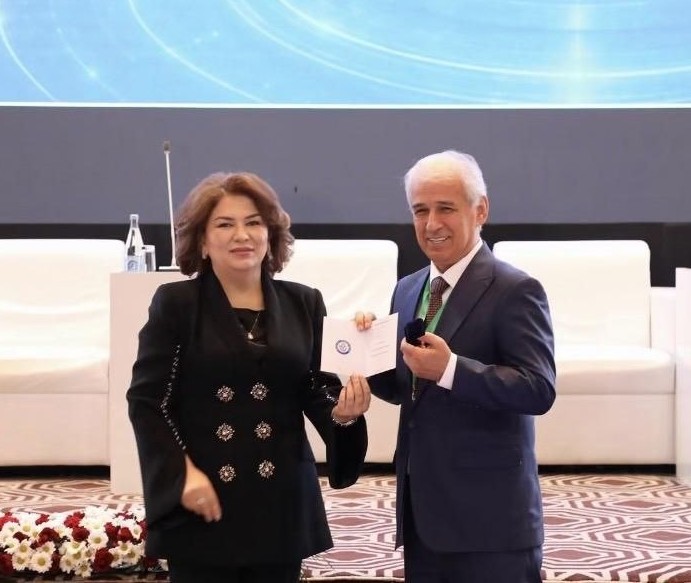
On June 30, 2026, pursuant to Order No. 206/ui issued by the Chairman of the Higher Attestation Commission under the President of the Republic of Tajikistan, the academic title of Professor was officially conferred upon Mavzuna Timurovna Karimova, Head of the Department of World Economy and International Economic Relations. She was awarded the academic title of Professor in the field of Economics. This remarkable achievement is the result of her distinguished academic and pedagogical work, continuous dedication, and significant contribution to the development of education and training. The leadership of the Institute of Economics and Demography of the National Academy of Sciences of Tajikistan is confident that Prof. Karimova will continue to contribute, with great responsibility and profound expertise, to the training of highly qualified specialists and the advancement of national science. The administration of the Institute of Economics and Demography of the National Academy of Sciences of Tajikistan sincerely congratulates Mavzuna Timurovna Karimova and wishes her good health, new scientific achievements, and continued success in her research and academic activities.
Good news! Confirmation of doctoral degree
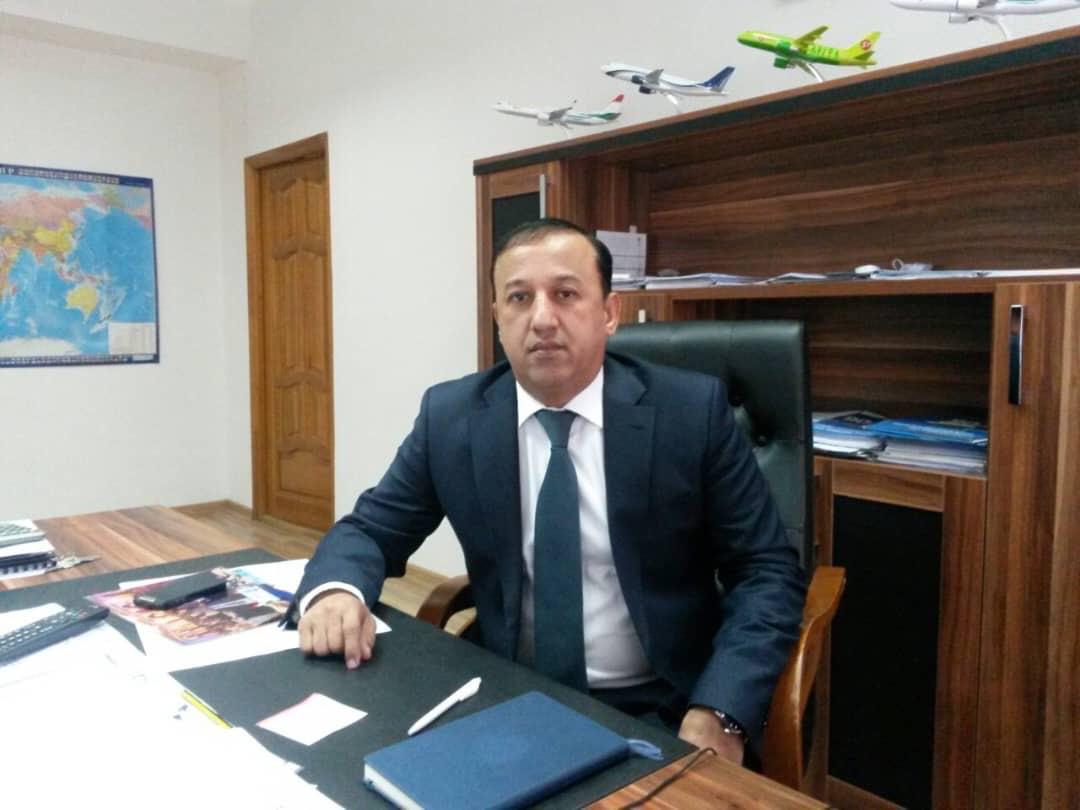
On June 30, 2026, by Order No. 207/di of the Chairman of the Higher Attestation Commission under the President of the Republic of Tajikistan, the academic degree of Doctor of Economic Sciences in the specialty 5.2.1 – Economic Theory was confirmed for Senior Researcher of the Department of World Economy and International Economic Relations, Yana Pavlovna Dovgyallo. She was awarded the degree of Doctor of Economic Sciences. The Administration of the Institute of Economics and Demography of the National Academy of Sciences of Tajikistan sincerely congratulates esteemed Yana Pavlovna Dovgyallo, wishing her lasting health, new scientific achievements, and further success in her research activities.


THE ROLE OF THE HONORABLE LEADER OF THE NATION IN STRENGTHENING GLOBAL PEACE: NEW INITIATIVE AND ITS SIGNIFICANCE
At a time when armed conflicts, political confrontations, and security crises engulf many parts of the world, the international community needs peacebuilding initiatives more than ever. In this context, the adoption by the UN General Assembly of the resolution “International Decade for Strengthening Peace for Future Generations, 2027–2036,” initiated by the Founder of Peace and National Unity – the Honorable Leader of the Nation, President of the Republic of Tajikistan Emomali Rahmon, is clear evidence of the international recognition of Tajikistan’s peace-oriented policy and its leader’s role in addressing global challenges. The essence of this initiative is to strengthen reliable foundations of international cooperation for sustainable peace, foster and preserve a culture of peace, expand dialogue among nations to prevent conflicts, educate the younger generation in the spirit of mutual understanding and tolerance, and promote sustainable development as a fundamental basis for peace and global economic growth. President Emomali Rahmon, addressing the UN, emphasized that the world today faces numerous threats – armed conflicts, terrorism and extremism, intensifying geopolitical rivalries, climate change, depletion of natural resources, forced migration, and growing social challenges. He stressed that the only way to overcome these threats is through sustainable peace achieved by cooperation, diplomacy, and dialogue. For Tajikistan, this initiative carries special importance: It enhances the country’s prestige on the international stage. It presents Tajikistan’s experience in restoring peace and national reconciliation as a model for other nations. It strengthens Tajikistan’s position as a supporter of peace and fruitful cooperation with all countries. It promotes conferences, forums, educational and research programs during 2027–2036, increasing global attention to Tajikistan. Overall, the initiative has universal significance, calling UN member states to reduce conflicts, build trust, engage in continuous dialogue, and resolve issues through political and diplomatic means. It represents a logical continuation of Tajikistan’s international policy: while previous initiatives focused on water, climate, and sustainable development, this one directs global attention to the comprehensive issue of lasting peace. Sharif Rahimzoda – Senior Researcher at the Department of Financial Markets and Investment Project Management, Doctor of Economics, Professor. Jalilzoda Dilshod Rajabmurod – Deputy Director of the Institute of Economics and Demography of the National Academy of Sciences of Tajikistan, Candidate of Economic Sciences.

Tajikistan – Initiator of International Peace!
June 25, 2026, became a historic and memorable day for the Republic of Tajikistan and peace-loving people around the world. On the evening of this day, the United Nations General Assembly adopted a special resolution proposed by the Founder of Peace and National Unity – Leader of the Nation, President of the Republic of Tajikistan, H.E. Emomali Rahmon, entitled “International Decade for Strengthening Peace for Future Generations, 2027–2036.” The main objectives of this resolution are to promote peace, encourage dialogue and reconciliation, and support intergenerational interaction – among children, youth, and the elderly – taking into account the needs and interests of future generations in policy-making and decision-making processes. In honor of this great historic event, the scientific staff of the Institute of Economics and Demography of the National Academy of Sciences of Tajikistan, with a strong sense of patriotism, national identity, and pride in the peace-oriented policy of the Head of State, continue to work on strengthening the culture of peace, preventing conflicts, fostering tolerance, mutual understanding, and expanding dialogue among civilizations in the global community as a foundation for a dignified life of future generations. The Institute of Economics and Demography of the National Academy of Sciences of Tajikistan held a conference on the theme “Independence – a Valuable Achievement of the Nation” (dedicated to the “International Decade for Strengthening Peace for Future Generations, 2027–2036,” the 35th anniversary of the state independence of the Republic of Tajikistan, and the 29th anniversary of national unity). The conference opened with a welcoming speech by Deputy Director for Science and Education, PhD in Economics, Jalilzoda Dilshod Rajabmurod, who emphasized that the fate of future generations depends on the decisions we make today. National unity for the people of Tajikistan is a rare achievement and the foundation of sustainable statehood. It is precisely thanks to peace, stability, and security that we live and work today in such a beloved and blessed homeland. The Tajik people, through their wisdom, managed to overcome the difficult trials of history and preserve their unity. We are obliged to safeguard this precious peace and stability as the apple of our eye and work together for the prosperity of our beloved Tajikistan. Following this, Senior Researcher of the Department of World Economy and International Economic Relations of the Institute of Economics and Demography of the National Academy of Sciences of Tajikistan, PhD in Economics, Kholboboev Fayzullo Samadovich, delivered a presentation entitled “Independence – a Guarantee of the Country’s Future Development.” In his speech, he stressed that national unity for us is not just a celebration. It is a guarantee of a peaceful life, economic growth, and a bright future for our children. At the conclusion of the conference, it was emphasized that the success of our people lies precisely in unity, solidarity, and joint efforts. May peace, unity, and prosperity always endure!

National Unity – Symbol of Peace and Stability
Indeed, the Tajik nation, one of the major branches of the Aryan peoples, has a history of more than six thousand years and throughout its history has relied on unity and shared cultural identity. National unity has always been the essence of the state’s existence and the cohesion of the Tajik people. For the Tajiks, unity is not just a concept, but a sacred value, an invaluable blessing, and the foundation of the durability of the state and society. However, in the early years of independence, the country faced serious political and social challenges. After the collapse of the Soviet Union, history shows that some ill-wishers did not want Tajikistan to embrace full independence peacefully and use its heritage for development. In those decisive moments, when the fate of the Tajik people was at stake, the nation needed a leader who could take on the pain of the people and bear the heavy mission of salvation. That leader was Emomali Rahmon, who confidently declared: “I will bring you peace.” It was precisely thanks to national unity that Tajikistan managed to overcome the difficult and tragic period of its modern history and open the way to development, prosperity, and progress. We can confidently state that the Founder of Peace and National Unity – Leader of the Nation, President of the Republic of Tajikistan, H.E. Emomali Rahmon, stood at the origins of the processes that led our people to genuine unity. He became the founder of peace and friendship among Tajiks, embodying the wisdom, patience, and resilience of our ancestors and the Tajik nation as a whole. The love and devotion of the Leader of the Nation are today recognized worldwide: he is known as a caring leader, promoter of peace and friendship among peoples. Thanks to his school of peace and creation, Tajikistan is recognized as a country without wars and bloodshed, with a peace-loving people striving for human happiness. That is why great efforts were made to restore peace and national reconciliation. This blessed day is celebrated annually on June 27 as a symbol of national unity, tolerance, and mutual respect, and is marked throughout the country with patriotism, national pride, and gratitude for peace and stability. In modern society, national unity has become a new chapter in the history of the Tajik people – a time of progress, formation, and pride in statehood. It is one of the most significant dates, a symbol of peace, harmony, mutual understanding, and stability, ensuring economic development and a dignified life for the country, as well as collective responsibility for the present and future of Tajikistan. Today, the peacebuilding and peacemaking experience of the Leader of the Nation, H.E. Emomali Rahmon, has become an example for the entire world. This path was not easy: the President of the country demonstrated courage, perseverance, loyalty, and boundless love for the people and the homeland, proudly overcoming difficulties and upheavals. Today, our country has entered a new stage of strategic development and possesses real potential to join the ranks of developed nations. It was national unity that enabled independent Tajikistan in a short time to transform from a vulnerable state into a prosperous country with strong security and independence. The bright future of Tajikistan lies in the fact that through peace, stability, national unity, and strengthening international relations, the country is becoming a new center of sustainable development in Central Asia. To achieve this high goal, it is necessary to raise the level of education, national self-awareness, and strengthen the role of science and enlightenment. Therefore, the worthy celebration of national unity is crucial for educating the younger generation in the spirit of patriotism, love for the Motherland, self-awareness, and preservation of peace, political stability, and integrity of our beloved country. Every Tajik must contribute to strengthening independence, unity, and peace, to the development and promotion of our homeland on the international stage. Mirzoeva J.P. – Senior Researcher of the Department of Infrastructure Studies, Institute of Economics and Demography of the National Academy of Sciences of Tajikistan

Sustainable Economic Growth as a Factor in Strengthening National Unity
“Today, thanks to the blessings of independence, sovereignty, and national unity, our people are confidently moving along the path of sustainable development towards the present and future of our beloved Motherland.” Founder of Peace and National Unity – Leader of the Nation, President of the Republic of Tajikistan, H.E. Emomali Rahmon. National unity provides the essential conditions without which sustainable economic growth is impossible, because: unity reduces social tension and contributes to the formation of long-term development strategies (including increasing the interest of entrepreneurs and investors in implementing long-term projects based on stability and clear rules of activity); the atmosphere of cohesion ensures the concentration of resources for development (for example, collective efforts in accelerated industrialization, digitalization, infrastructure development – energy, transport – and support for small and medium-sized enterprises); consolidation around a common goal – improving the standard and quality of life of the population – promotes constructive cooperation between government bodies, entrepreneurs, the scientific community, and civil society (including dialogue, compromise, and effective distribution of roles and resources); a general level of trust and responsibility for the future of development is formed on the basis of justice (equal access to opportunities, education, and healthcare), which stimulates the development of human capital as the foundation of an innovative and competitive economy. As a result, the country’s development is increasingly linked to sustainable growth trends, and the standard of living of the population rises. Over the past 25 years, average annual GDP growth has been 7.7%. Macroeconomic stability has made it possible to reduce poverty from 81% in 1999 to 19% in 2025, inflation from 26.3% to 3.5%, and to increase household incomes and budgetary financing of social sectors. If in 2000 GDP per capita was $158, then in 2025 it reached almost $1,642.2 – more than 10 times higher. The average annual growth rates of GDP per capita were 2–3 times higher than population growth rates, which indicates an improvement in living standards. By 2030, GDP growth of at least 8% annually is expected. This will allow GDP per capita to increase by 1.5 times during 2026–2030. The goal is for the country to join the group of middle-income states, completely eradicate extreme poverty, reduce poverty to 10%, and increase the share of the middle class to 50%. All strategic programs of the country – the National Development Strategy until 2030, medium-term development programs (2026–2030), and sectoral programs – are aimed at achieving these goals. Special attention is paid to fiscal policy, human capital development, financial stability, banking system reform, industrialization, and agricultural development. Over 25 years, industrial output has increased 9 times, and agricultural output – 6 times. The main goal of all programs is to improve the living standards of the population. The state continues efforts to provide social support to citizens, create jobs, and develop education and healthcare. Thus, national unity has become the foundation of sustainable socio-economic development, contributed to a significant reduction in poverty, and the formation of a middle class as a key force for long-term growth. Muminova F. – PhD in Economics, Head of the Department of Digital Economy and Innovation, Institute of Economics and Demography of the National Academy of Sciences of Tajikistan

National Unity – The Foundation of Sustainable Economic Development in Tajikistan
National Unity Day is recorded in the history of the Republic of Tajikistan as a memorable date, a foundation of peace, and a basis for the country’s economic development. This historic day is not only a symbol of peace and stability for the Tajik people but also a cornerstone for the nation’s political, social, and economic progress. Achieving national unity after the difficult years of civil war gave Tajikistan the opportunity to embark on a path of construction and development, creating favorable conditions for improving the living standards of its population. It should be emphasized that the key foundation of the country’s development lies in unity, consensus, peace, and tranquility. Global experience shows that without peace and mutual understanding, economic progress is impossible. Accordingly, after the signing of the General Agreement on the Establishment of Peace and National Accord in 1997, Tajikistan entered a new stage of development. During this period, a favorable investment climate emerged, entrepreneurship expanded, and the national economy gradually grew. In the years of independence, especially after the restoration of peace and unity, the country’s main economic and macroeconomic indicators improved significantly. Hundreds of new industrial enterprises were established, thousands of jobs created, which contributed to increased tax revenues, infrastructure development, reduced unemployment, higher household incomes, greater competitiveness of domestic products, growth in exports, attraction of investments, and improvement of the socio-economic situation of the people. National unity and peace enabled the state to implement strategic goals such as ensuring energy independence, overcoming communication isolation, achieving food security, and accelerating industrialization. As a result, the energy, transport, communications, industry, agriculture, and service sectors experienced unprecedented growth. One of the most important directions of Tajikistan’s economic development is ensuring energy independence. Thanks to peace, stability, and the constructive policies of the Founder of Peace and National Unity – Leader of the Nation, President of the Republic of Tajikistan Emomali Rahmon, major energy projects, including the Rogun Hydropower Plant, are being implemented. This grand facility has strategic significance and in the future may become a key source of electricity exports and national income growth. Today, more than 90% of Tajikistan’s electricity is generated from renewable hydropower sources, creating favorable conditions for energy security and industrial development. Significant progress has also been achieved in transport and communications: dozens of tunnels, hundreds of kilometers of international roads, and bridges have been built. Strategic projects such as “Dushanbe – Chanak,” “Kulob – Kalaikhumb,” and other international highways have facilitated trade and economic integration. Industry has grown several times compared to the early years of independence. The policy of accelerated industrialization led to the establishment of hundreds of new manufacturing enterprises. While in the late 1990s most industrial goods were imported, today the share of domestic production is steadily increasing. In the social sphere, notable progress has also been made. Poverty levels, which affected more than 80% of the population in the early post-war years, have decreased to about 20%. Rising household incomes, entrepreneurship development, and increased remittances from migrants have contributed to improving people’s living standards. Today, Tajikistan has entered a new stage of development, implementing strategic goals such as accelerated industrialization, digitalization of the economy, and the development of a “green” economy. All these achievements have been possible only in conditions of peace and national unity. Thus, national unity is not only a political and spiritual value but also a crucial factor in Tajikistan’s economic development during independence. It plays an important role in the development of science, education, and human capital. Tajik youth now have the opportunity to study in domestic and foreign universities and research centers, making a valuable contribution to the national economy. Modern economic development relies primarily on knowledge, technology, and human intellectual potential. In today’s conditions, Tajikistan is confidently moving towards the development of a “green” economy, digitalization, and the use of renewable energy sources. The implementation of modern technologies, including solar and wind energy, as well as the production of green hydrogen, opens new economic opportunities for the country. The realization of such strategic goals is possible only in conditions of peace and national unity.

National Unity — the guarantee of the survival of the nation and the state.
“Thanks to national unity and political stability, the prestige of independent Tajikistan is rising day by day on the international stage.” Emomali Rahmon The pages of Tajikistan’s modern history testify that at the dawn of independence our country was drawn into the whirlpool of civil war. This tragedy paralyzed state structures and led to a deep crisis in the economy and science. Only after the signing of the General Agreement on the Establishment of Peace and National Accord in Tajikistan on June 27, 1997, did a new stage of construction begin. Unity demonstrated that the power of thought and dialogue can triumph over war and destruction. National unity enabled us to ensure peace and complete security in the country, to implement the idea of people’s solidarity in practice, to lay the foundation for the development of various spheres of life, and to strengthen the system of national statehood. Science can only be born and flourish in a peaceful and stable environment. In times of war or unrest, scientific thinking gives way to mere survival. Therefore, unity can be considered the primary factor of scientific progress. Today, the country’s scholars, including the staff of the Institute of Economics and Demography of the National Academy of Sciences of Tajikistan, have the opportunity to engage freely in fundamental and applied research. Especially after the opening of the new building of our scientific institution, held with the direct participation of the Chairman of the National Assembly of the Supreme Assembly of the Republic of Tajikistan, Mayor of Dushanbe, His Excellency Rustam Emomali, in the academic town of the National Academy of Sciences of Tajikistan in Shohmansur district of Dushanbe, the activation of scientific research and expansion of scholarly activity have become top priorities for the Institute of Economics and Demography. National unity has entered the history of the Tajik people as a new era in the formation of Tajik statehood. This blessed holiday is a symbol of peace, mutual understanding, and tranquility in our society, a cause of economic revival, and a reminder of our shared responsibility for the present and the bright future of Tajikistan. State independence, national unity, and other national values must be promoted and preserved in the consciousness of every member of society, especially the younger generation. Protecting borders and striving to safeguard interests, culture, and national identity, alongside promoting healthy ideas, is an important duty of every active citizen. Unity is a symbol of coexistence, peace, love, and cooperation among the people of the nation. It means the unification of all layers of society, regardless of beliefs, religion, nationality, or social status. Only in an atmosphere of unity and peace can the development of education, science, economy, culture, and politics be ensured. Happy 29th Anniversary of National Unity Day! “We must always and everywhere remember one very important truth: we have only one Homeland, one united and sacred land, and in the world we are known and respected by the name of our state and beloved Motherland — Tajikistan.” Emomali Rahmon Bobozoda Komil Olimjon Director of the Institute of Economics and Demography, NAST

From the life and legacy of the nation’s distinguished sons — Nusratullo Maksum, Shirinsho Shotemur, and Nisor Muhammad
As previously reported, through the unique and historic initiative of the Founder of Peace and National Unity — Leader of the Nation, President of the Republic of Tajikistan, His Excellency Emomali Rahmon, part of the soil from the graves of the historical and selfless figures — Nusratullo Maksum, Shirinsho Shotemur, and Nisor Muhammad — was brought from Moscow, Russian Federation, back to their homeland. The funeral ceremony and reburial took place at the Luchob cemetery in Dushanbe, in accordance with Islamic traditions and with special respect. The historical services of these devoted sons of the nation in the formation of national statehood, protection of people’s interests, and strengthening of independence and national identity will always be honored. Their names will remain eternal in the nation’s history as examples of loyalty to the Motherland, courage, and sacrifice. Honoring their memory is a sign of respect for the history of statehood and recognition of the heroes who gave their lives for the survival of the nation and the future of the state. Nusratullo Maksum Nusratullo Maksum (Nusratullo Lutfulloev) was born in 1881 in the village of Chashmai Qozi in the Garm valley (now Rasht district) in a peasant family. He received primary education in a school and madrasa, helped his father in farming, and later worked abroad, gaining knowledge and languages. From 1920 he was involved in establishing Soviet power in Eastern Bukhara. In November 1924, after the creation of the Tajik Autonomous Soviet Socialist Republic, he was elected Chairman of the Revolutionary Committee — the first leader of Tajikistan. In 1929, after Tajikistan became a full Union republic, he became Chairman of the Central Executive Committee of the Tajik SSR and co-chairman of the USSR CEC, serving until December 1933. In July 1937, during Stalin’s purges, he was arrested on false charges and executed in October. In 1957 he was rehabilitated. In independent Tajikistan, his role was reassessed, he was awarded the title Hero of Tajikistan, and his name was given to institutions and streets. Shirinsho Shotemur Shirinsho Shotemur was born in 1899 in the village of Porshnev, Shugnan district (now GBAO). He studied at the Russian school in Khorog from 1911. From an early age he worked and participated in strengthening Soviet power in Central Asia. A member of the Communist Party since 1921, he studied in Tashkent and worked in various institutions. After the national-territorial division in 1924, he was sent to Dushanbe. Shotemur was one of the initiators of the newspaper Ovozi Tojik (“Voice of the Tajik”), which defended the Tajik language and culture against pan-Turkist ideology. He held high party and state positions: secretary of the Tajik Communist Party, chairman of the CEC of the Tajik SSR. He was awarded the Order of the Red Banner of Labor. In 1937 he was repressed and killed. In 2006 he was awarded the title Hero of Tajikistan. Nisor Muhammad Nisor Muhammad was born in 1897 in Peshawar. He participated in Afghanistan’s anti-British war of 1919 and was a companion of Amanullah Khan. Later, as a political émigré, he moved to Central Asia and contributed greatly to education in Tajikistan. He authored the first textbooks (“Alphabet”, “Guide to Arithmetic”) and in 1927 became People’s Commissar of Education of Tajikistan. He helped send the first Tajik students to universities in Moscow and Leningrad. In October 1937 he was arrested and executed. In Dushanbe, a street where the Ministry of Education and Science is located is named after him.

State Sovereignty and National Accord
Key Factors for Stability and Sustainable Development of the State and Nation In the history of nations and states, there are significant events and dates whose importance and value grow over time, becoming national treasures that inspire people to respect, preserve, and strengthen these achievements. For the people of Tajikistan, National Unity Day is one such historic and decisive event. 29 years ago, on June 27, 1997, after prolonged negotiations aimed at preserving territorial integrity, ensuring peace and stability, and uniting the nation, the General Agreement on the Establishment of Peace and National Accord in Tajikistan was signed. This crucial document became a turning point in the modern history of the nation. It ended the imposed civil war and laid the foundation for the development of an independent Tajik state and a peaceful life for its people. The phenomenon of national unity is closely linked to the formation of nation-states, where the need for a shared political identity becomes essential. Therefore, the role of the state in strengthening unity increases, as it is interested in economic progress, social stability, and cultural development. National unity encompasses multiple factors, among which the coordination of state institutions plays a critical role. The experience of several post-Soviet countries has shown that lack of coordination can lead to internal conflict, whereas Tajikistan’s approach proved effective and justified. In the modern world, it is evident that achieving national reconciliation and ending conflict was extremely challenging. It is therefore important to educate the younger generation about the tragic events of the early 1990s, when the country was on the brink of collapse and negotiations became the only path to survival. It is symbolic that the Founder of Peace and National Unity, Leader of the Nation Emomali Rahmon, began his leadership with a peace-building mission and continues this policy for the prosperity of the country. His contribution to ending the war and uniting the nation is invaluable. The path to unity was difficult and dangerous, but through strong political will and persistent efforts, peace was achieved. More than twenty rounds of negotiations over nearly four years led to the signing of the historic peace agreement. A significant step was President Rahmon’s visit to Afghanistan in December 1996 despite serious risks. His determination was captured in the statement: “I will sacrifice my life, but I will not retreat.” Following peace, the country began reconstruction: destroyed infrastructure was rebuilt, and nearly one million refugees returned to their homeland. This achievement is recognized globally as a unique example of successful peacebuilding. The agreement became the guiding foundation for the country’s development, and national unity gained a sacred place in public consciousness. The Tajik peace experience has been recognized and supported by the international community, and today Tajikistan’s initiatives are welcomed globally. The government’s humanitarian policies, including the amnesty law adopted for the 35th anniversary of independence, reflect compassion and a commitment to social harmony. Forgiveness is regarded as an important moral value that strengthens society and helps prevent conflict. In conclusion, every citizen must understand that independence and national unity are fundamental pillars of state stability. Strengthening these foundations requires continuous constructive work and civic responsibility. The tragic events of the past serve as a reminder to preserve peace, maintain stability, and strengthen unity for a better future. Sobirov Orash Masudjonovich 3rd-year PhD Doctoral Student Institute of Economics and Demography, National Academy of Sciences of Tajikistan

Opening of the new building of the Institute of Economics and Demography of the National Academy of Sciences of Tajikistan
On June 9, 2026, an important and memorable event took place at the Institute of Economics and Demography of the National Academy of Sciences of Tajikistan. With the participation of the Chairman of the National Assembly of the Supreme Assembly of the Republic of Tajikistan, the Mayor of Dushanbe, Honorable Rustam Emomali, the new building of the Institute of Economics and Demography was inaugurated in the academic campus of the National Academy of Sciences of Tajikistan, located in the Shohmansur district of Dushanbe. The building consists of 6 floors and a basement, designed to accommodate 150 scientific staff. Alongside other scientific departments, the new building houses the Center for Digital Economy and Innovation, the Center for Green Economy and Sustainable Development, a library, a cafeteria, and a heating facility. Thanks to the direct instructions of the Founder of Peace and National Unity — Leader of the Nation, the beloved President of the country, Honorable Emomali Rahmon, and the continuous support of the Mayor of Dushanbe, Honorable Rustam Emomali, effective measures have been implemented in recent years to advance science. Creating favorable scientific conditions, which serve as the foundation for achievements in scientific innovation and comprehensive progress of the state and nation, is one such measure. Following the policy of the esteemed Leader of the Nation and the constructive efforts of Honorable Rustam Emomali, the leadership of the National Academy of Sciences of Tajikistan strives to ensure that Tajik science keeps pace with modern times. In response to the support provided, the activation of scientific research and the expansion of scholarly activity are considered top priorities for the scientific community of the Institute of Economics and Demography of the National Academy of Sciences of Tajikistan.